
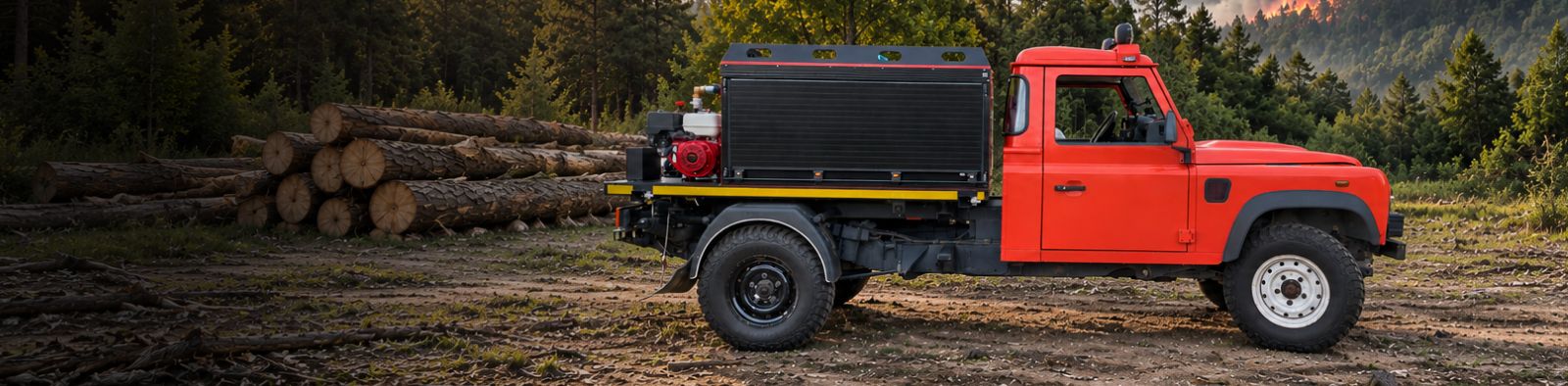
A look at the operational potential of the classic Defender in wildland fire suppression.
A Fleet Opportunity Born From Numbers
Between 1948 and 29 January 2016, Land Rover built more than 2,016,933 Series and Defender units at its Solihull plant in the UK —one of the longest continuous production runs in automotive history. Of that figure, the so-called «classic era» of the Defender (1983–2016) accounts for a very significant share, with 70% of production exported to more than 150 countries during its early decades.
This scale makes the classic Defender one of the off-road vehicles with the largest number of units available worldwide for a second working life —a fleet that, admittedly, shrinks year after year as corrosion, accidents and neglect take units out of circulation. It is precisely this combination —a fleet that is still large but shrinking— that makes acting now worthwhile.
A Restoration Market That Has Already Proven Viable
Turning a Defender over 25 years old into a reliable vehicle for forestry work is not just a matter of looks, which is why it is worth noting that a fully professionalised restoration and «restomod» (restoration + modernisation) market already exists. Full builds —rebuilt from the chassis up, with engine replacement and technical documentation of every stage— run between $145,000 and $500,000 in the collector market, and Land Rover itself has offered its official Defender V8 Works Bespoke full-restoration programme since 2023. The Bring a Trailer platform passed $1.7 billion in classic vehicle sales in 2025.
Beyond the figures, what this data confirms is that a mature network of workshops already exists, capable of bringing a classic Defender's mechanical and structural reliability up to a level fit for demanding use —the same technical foundation that would make converting it into a fire-support vehicle possible, and not just a collector's piece.
The Opportunity: A Tactical Module Designed for the Classic Defender
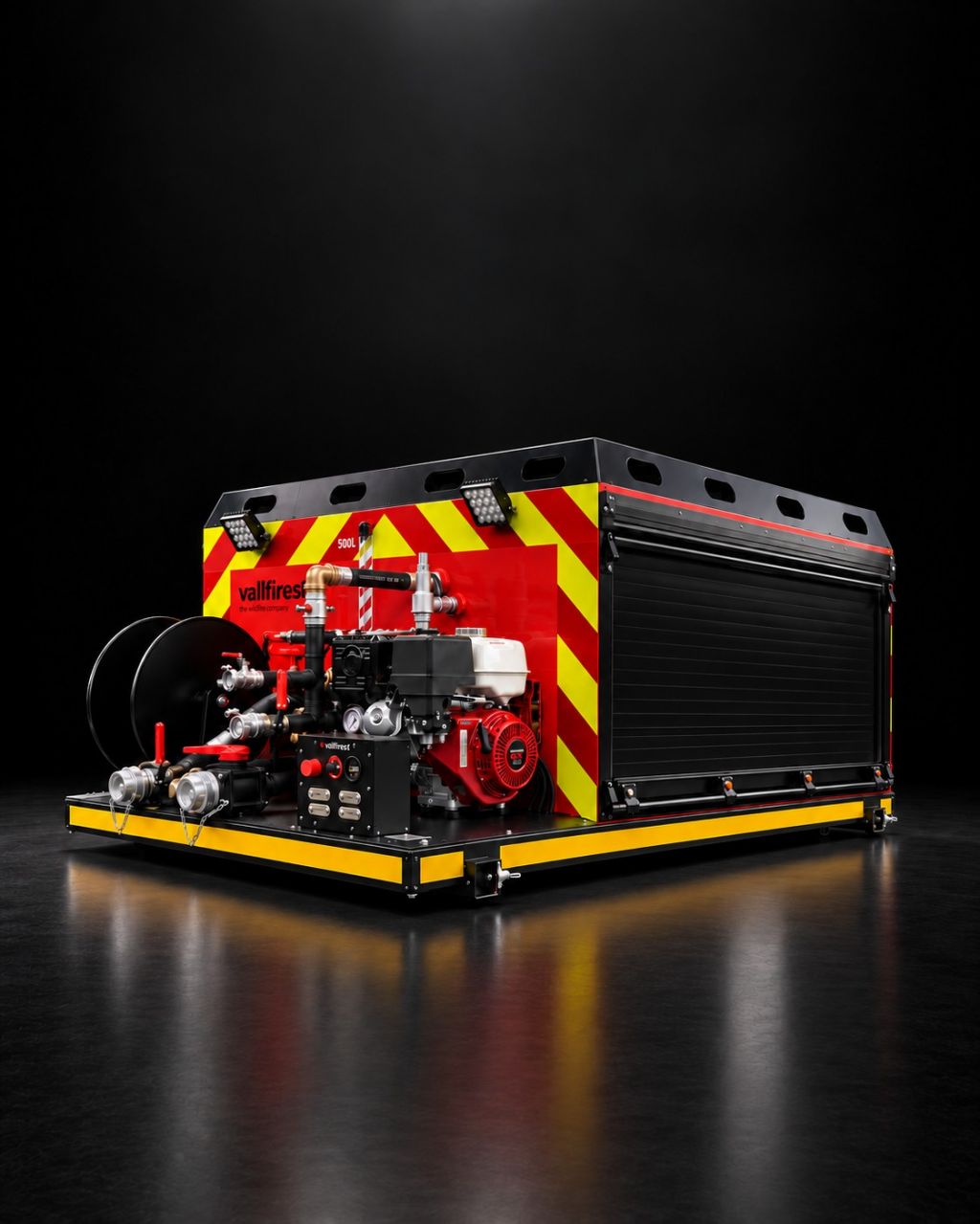
In recent years, the wildland fire sector has increasingly adopted a modular approach to equipping light trucks: instead of building a single, closed water-tender vehicle, independent modules —tank, pump, hoses, tool compartments— are installed that can be mounted, removed or adapted to different chassis depending on the mission. It is precisely this approach that opens the door to thinking of the classic Defender as a base for a tactical firefighting module built to its own scale.
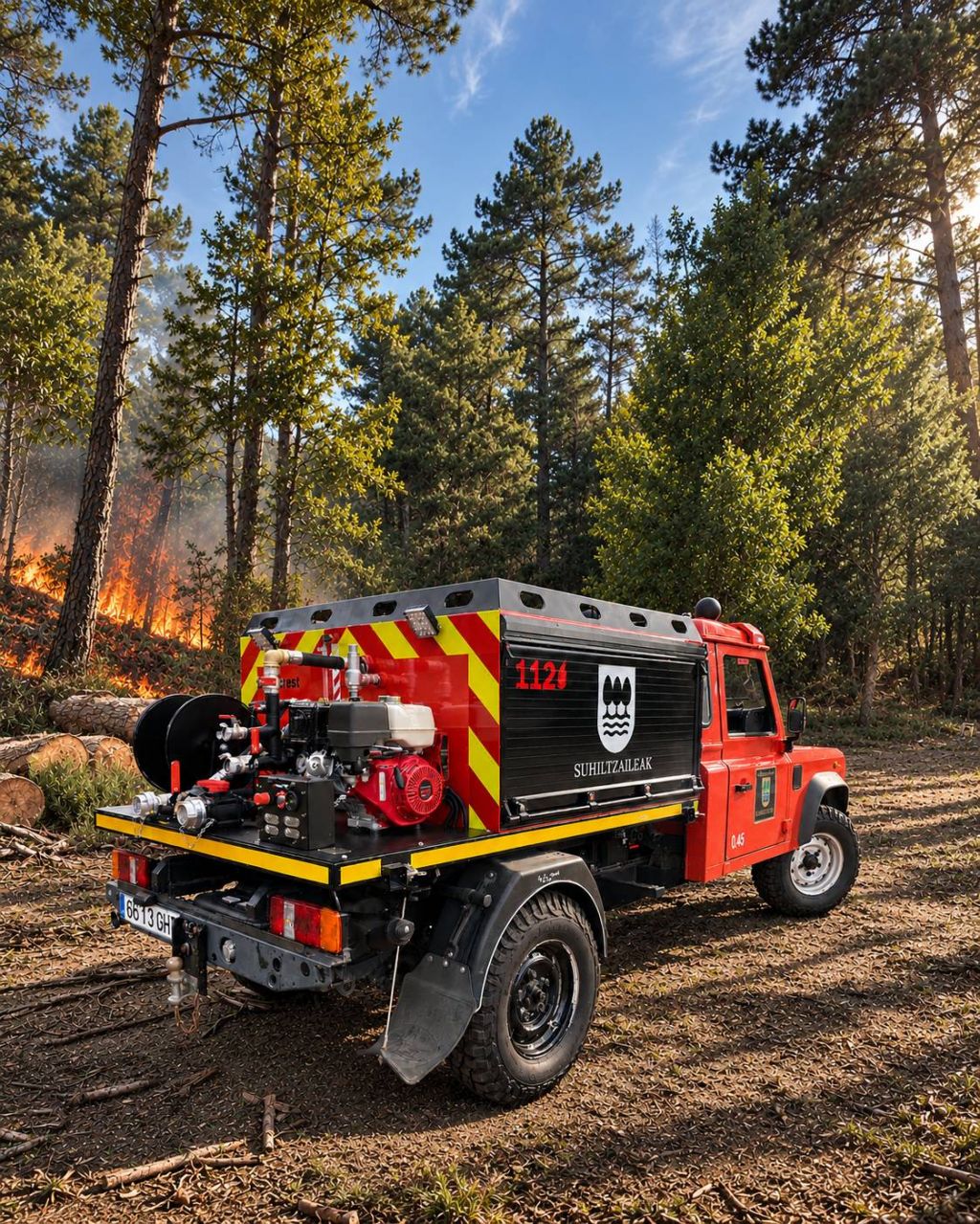
A good example of this type of solution is the Tactical Unit modules, already in use across various wildland operations. These are multifunctional modules, built from polyethylene and steel, designed to turn a light truck into a complete firefighting tool: they can include a medium-pressure fire pump kit, water tanks of up to 3,000 litres with internal baffles, cabinet blocks for PPE and hand tools, and an upper cargo tray for carrying additional items such as portable pumps or direct-attack equipment in remote areas. Their structure relies on a mounting system that allows the whole module to be removed from the vehicle in under five minutes, giving the same chassis different configurations depending on the day's mission. Adapted to the dimensions of a Defender chassis, this module would give rise to a compact version —the Compact Tactical Unit— designed specifically for this type of vehicle.
These features fit naturally with what the classic Defender has to offer: 4x4 traction and off-road geometry designed from the outset for narrow forest tracks and demanding terrain, a chassis with enough load capacity for a smaller-sized module, and compact dimensions that let it move nimbly where a conventional fire engine cannot reach. Today's existing modules are sized for larger light trucks, so adapting them to a Defender chassis would require a more compact, redistributed version —but the modular, made-to-measure design principle is exactly what would make that adaptation viable. As with any conversion of this kind, the chassis condition and available load capacity set the technical starting point —but, as the already-established restoration market shows, resolving those aspects is far from an insurmountable obstacle.
What emerges is a vehicle designed specifically for interventions where speed, manoeuvrability and access to remote areas matter more than load capacity: preventive patrol, first response to spot fires, logistics support for deployed crews, or transporting specialised equipment —all on a platform with more than seven decades of proven performance on the planet's most demanding terrain.
There is also a relevant technical factor: the mechanical diesel engines that powered much of the classic production —such as the 200Tdi and, especially, the 300Tdi (1994–1998)— have no electronic management, which makes them particularly valued for their mechanical simplicity and low field maintenance, a quality highly appreciated in remote operations where access to electronic diagnostics is limited. As for towing capacity, well-maintained classic Defenders typically rate up to 3,500 kg braked, a margin that in many markets allows for towing additional equipment —such as a water tanker trailer or a portable pump— without compromising the vehicle's own payload.
A Trend Already Moving Within the Bodybuilder Sector Itself
Refurbishing instead of replacing is not a concept foreign to the firefighting world: it is already an active practice among manufacturers of emergency vehicle bodies and equipment, who have for years offered their own refurbishment services to bring existing fire trucks and equipment back to «like new» condition, while also adding updated technology. Documented cases in the sector include thirty-year-old vehicles refurbished with a new body, new pump, new electronics and a renewed braking system, as well as off-road vehicles over three decades old put back on the front line for volunteer fire departments.
This approach is no isolated exception: various manufacturers in the sector present it as a systematic alternative to buying new, with explicit advantages in cost, sustainability and operational continuity —with no additional training needed for crews, who already know the vehicle. The logic that the bodybuilder sector applies to its own large-format vehicles is, in essence, the same logic behind the opportunity to give the classic Defender a second life: making use of a solid, already-proven mechanical base and updating it with current firefighting technology.
What This Type of Vehicle Delivers, in Several Ways
The value of this reuse route is not reducible to a single argument: it rests on several levels at once.
- Operational value: a more agile, compact vehicle than a conventional fire engine, able to move along narrow tracks and terrain with limited access, ideal as a complement —not a replacement— to existing firefighting resources.
- Economic value: a way to access additional operational capacity with a lower entry cost than buying a new vehicle, especially relevant for organisations with tight budgets.
- Sustainability value: giving a real second working life to a vehicle that has already been built, rather than sending it to the scrapyard or static collections, fits with a circular-economy logic increasingly present in the sector.
- Symbolic and narrative value: for much of the world, the Defender is synonymous with reliability in extreme conditions; seeing it work again, this time protecting forests and communities, connects the vehicle's heritage with a mission that is still fully relevant.
Taken together, these elements sketch out a clear opportunity: the worldwide fleet of classic Defenders, the maturity of the restoration market and the logic of modular firefighting systems converge on the same point. Giving these vehicles a second life in service of the fight against wildfires is not just possible —for those who know how to seize it, it is one of the most elegant ways to unite heritage with real-world utility.
Frequently Asked Questions
Can a classic Land Rover Defender be converted into a wildland firefighting vehicle?
Yes, provided the chassis is in good condition or recoverable through galvanising. Its 4x4 traction and off-road geometry are also natural advantages for forest tracks and hard-to-reach terrain.
What is the difference between a conventional wildland fire engine and a Defender fitted with a tactical module?
The conventional fire engine prioritises water capacity and range; the Defender with a compact module prioritises manoeuvrability and rapid deployment. They do not compete with each other: the latter complements the former in patrol, first response or logistics support.
Is it cheaper to refurbish a classic Defender than to buy a new firefighting vehicle?
Generally, yes: acquiring a classic donor vehicle and refurbishing it usually costs less than a new fire engine, though the final cost depends on the starting vehicle's condition and the level of work required.
What maintenance does a refurbished classic Defender need for operational use?
The era's mechanical diesel engines —200Tdi, 300Tdi— stand out for low maintenance since they lack electronic management. Even so, it is worth planning regular checks of chassis, brakes and suspension, especially given the added weight of a tank and pump.
Where can classic Defenders be found for this type of project?
The donor-vehicle market is already well established, with specialised auctions, restoration workshops and dedicated builders in multiple countries, making it easier to find a starting unit as well as access to qualified labour.
Does any firefighting module work on a classic Defender?
Not necessarily. Existing modular systems on the market —such as Tactical Unit-type systems— are designed for larger light trucks, so adapting them to a Defender would require a more compact, redistributed version.