
Summer 2026 is turning into one of the most demanding wildfire seasons on record for Southern Europe and North Africa. Week after week, thousands of wildland firefighters, ground crews, aerial resources and volunteers are working under extreme conditions to hold back fire behaviour that, more and more often, exceeds available extinguishing capacity before anyone can even stand and fight it.
The situation, in brief
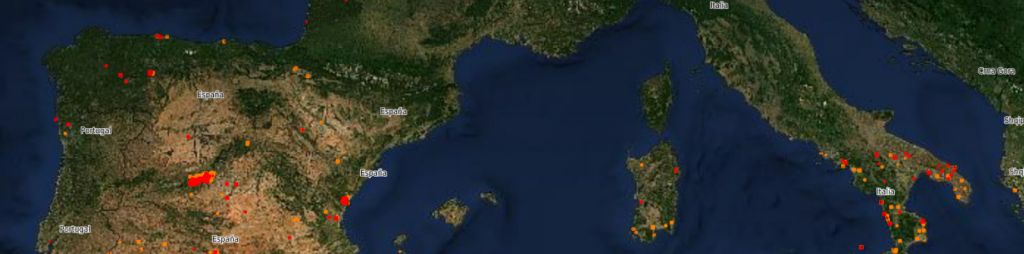
- Spain currently tops the EU ranking for burned area this year, with one major fire jointly affecting Ávila and Madrid, among several other large wildfires across the peninsula.
- France is fighting between 30 and 40 simultaneous fires every day, with the Gironde front, near Bordeaux, standing out as the most serious of the year.
- Italy has been under continuous emergency conditions in Sicily for weeks, with more than 1,400 call-outs for the Vigili del Fuoco (the Italian fire service) since mid-July.
- Portugal and Turkey have both seen activity ease off after bringing their most serious fronts of the past few weeks under control.
- Algeria is facing the harshest crisis in the southern Mediterranean, with dozens of active fires and entire communities defending themselves with very limited resources.
According to the European EFFIS (Copernicus) system, burned area across the EU already exceeds the historical average of the last two decades, and fire danger forecasts remain extreme across much of the Iberian Peninsula and southwestern France.
Prevention: the least visible part of firefighting
Once a fire is already beyond extinguishing capacity, the window to act safely shrinks drastically. That's why the work that really makes the difference in a season like this one almost always happens months before the first flame is ever declared: forest management, fuel-break discontinuities, clearing perimeter strips in wildland-urban interface areas, and early detection systems capable of catching a spark before it grows into an unmanageable front.
Prevention isn't a symbolic gesture. It's the difference between a fire put out by a four-person crew in twenty minutes and a fire that, weeks later, forces the evacuation of tens of thousands of people and the mobilisation of aircraft from half of Europe. Every awareness campaign, every well-planned prescribed burn, and every protective buffer around a populated area measurably reduces the risk that the next heatwave turns into another national emergency.
A necessary recognition for those on the front line
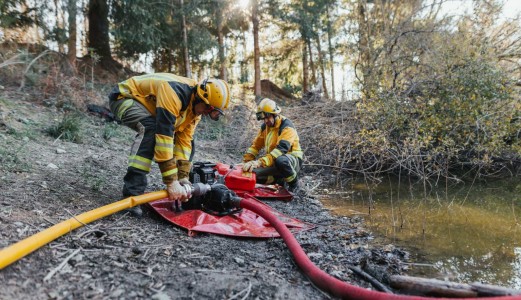
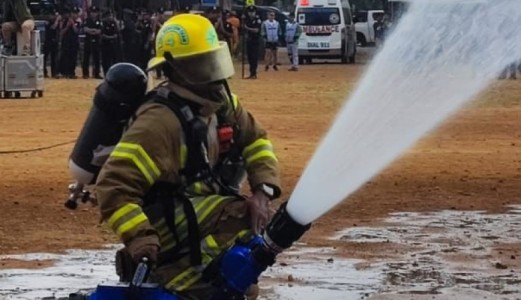
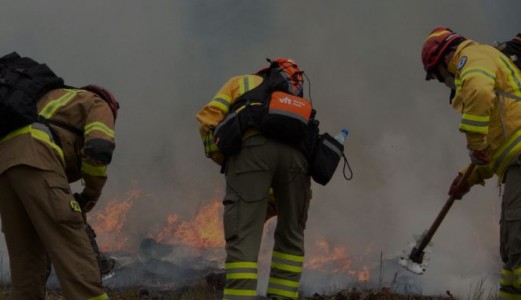
Behind every hectare-burned figure are thousands of people working exhausting shifts, in extreme heat, thick smoke, and days that stretch on with barely any rest: forest fire crews, firefighters, emergency military unit personnel, aircrews, and civil protection volunteers, among many others. The cross-border cooperation shown this summer — with Greece, Italy, Turkey and Portugal sending resources to Spain, or Italy and Spain supporting Portugal weeks earlier — is a reminder that the fight against major wildfires is no longer contained within a single border.
That collective effort deserves explicit recognition, not only when tragedy strikes, but as a standard part of how every fire season is told.
More heat, more drought, longer seasons
Climate attribution studies on the record-breaking heatwaves that hit Europe in late June this year agree that extreme episodes of this kind would be virtually impossible without human-caused climate change. According to the Copernicus Climate Change Service, Europe is the fastest-warming continent on the planet, with temperatures rising at more than double the global average rate.
That trend doesn't just increase the number of days with extreme fire risk: it also stretches the season at both ends, pushing the first major spring fires earlier and delaying the end of the campaign well into autumn. Ultimately, that's the underlying reason why prevention has stopped being an option and has become the real first line of defence.
Overview updated as of 27 July 2026, based on data from EFFIS/Copernicus, national authorities in Spain, France, Italy, Portugal and Turkey, and World Weather Attribution. The situation is evolving day by day.