
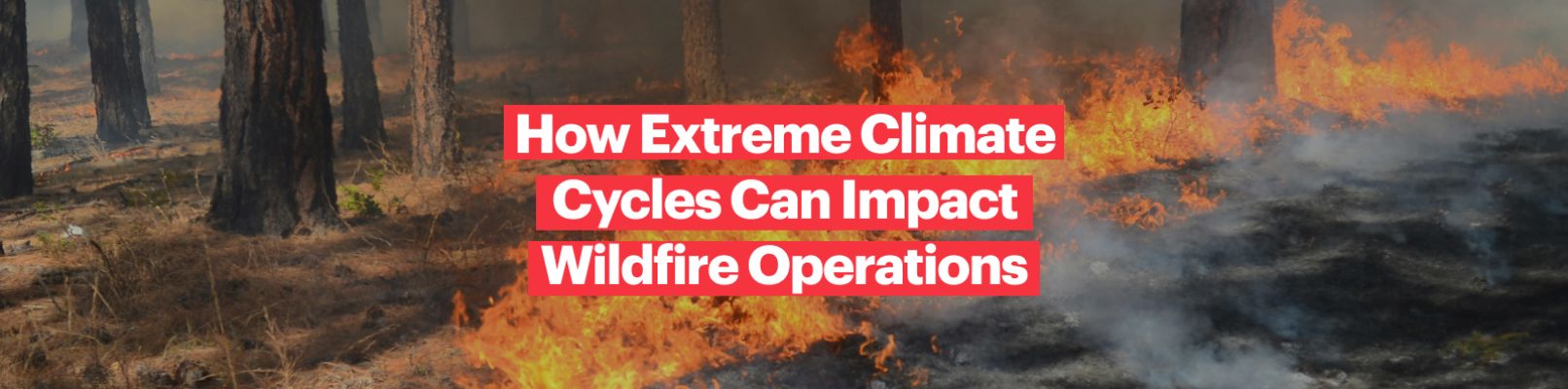
How Extreme Climate Cycles Can Impact Wildfire Operations
Extreme climate cycles such as El Niño are continue to making headlines around the world. While their effects vary from region to region, they often influence the environmental conditions that shape wildfire behavior and operational complexity.
For wildfire agencies, the discussion should not focus solely on climate forecasts.
The real question is how changing conditions can affect preparedness, response capabilities, and operational effectiveness when the next fire season arrives.
When Water Becomes the Limiting Factor
Water is often one of the first operational challenges during prolonged dry periods.
As drought conditions intensify, natural water sources may become less accessible or less reliable, increasing the need for efficient water logistics and storage solutions.
Preparing for these scenarios requires more than simply increasing capacity. It requires a system capable of transporting, storing, and distributing water where and when it is needed most.
Deployable storage systems such as Vallfirest Inflatable Tanks allow agencies to rapidly establish temporary water supply points close to the incident. Available in capacities ranging from rapid-deployment units to large-scale aerial support reservoirs, they help reduce refill times and increase operational autonomy.
For remote incidents where access is limited, the Vallfirest Heliskid provides a mobile aerial water supply platform capable of transporting water and pumping resources directly into operational areas, bringing critical water infrastructure closer to the fireline.
When Initial Attack Becomes Critical
Under severe conditions, small ignitions can escalate rapidly.
When fuels are dry and weather conditions are unfavorable, the window of opportunity for successful initial attack becomes significantly shorter.
Agencies must be able to detect incidents quickly, deploy resources rapidly, and deliver water effectively during the first stages of suppression.
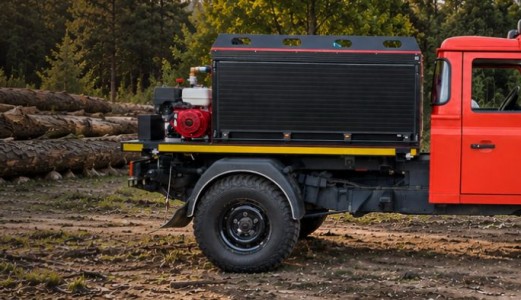
The Vallfirest UTV Skid Units are designed specifically for rapid intervention in off-road environments, providing a lightweight and agile suppression platform capable of accessing locations that traditional fire engines cannot reach.
For larger response capabilities, Vallfirest Pickup Skid Units combine increased water capacity, high-performance pumping systems, and operational mobility, allowing crews to attack fires quickly while maintaining flexibility in complex terrain.
When Water Must Travel Further
Large wildfires often develop in locations where water sources are limited or distant from the fireline.
In these situations, the ability to transport water over long distances becomes a critical operational capability.
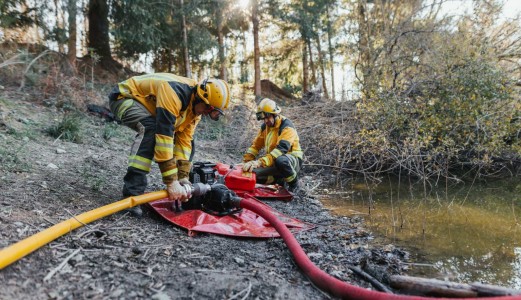
Portable pumps, relay pumping operations, and long hose lay configurations allow crews to maintain flow and pressure in areas where traditional vehicle access may be restricted.
The Vallfirest BP4 Portable Pump has been developed for wildfire operations requiring maximum portability. Its lightweight design allows firefighters to transport it rapidly through difficult terrain while delivering the pressure needed for extended hose lay operations.
For larger incidents and demanding water transport operations, the Vallfirest BH4 Portable Pump delivers higher flow and pressure performance, supporting long-distance water movement and sustained suppression campaigns.
Together, these pumping systems allow agencies to extend operational reach and maintain effective water delivery in remote environments.
When Aerial Resources Become Essential
Remote terrain, difficult access, and fast-moving incidents frequently require aerial support.
Helicopters, aerial water delivery systems, and emerging drone technologies provide agencies with additional flexibility to support suppression efforts and improve access to critical areas.
The Vallfirest Water Hog system expands aerial suppression capabilities through a scalable bucket platform designed for helicopter operations. Its versatility allows agencies to adapt water delivery capacity to mission requirements while maximizing aircraft productivity.
For precision suppression in Wildland Urban Interface environments and hard-to-access locations, the Water Hog Drone introduces a new capability for drone-based water delivery. Designed specifically for aerial firefighting operations, it enables targeted suppression where conventional aerial assets may be inefficient or unavailable.
Combined with systems such as the Heliskid and Inflatable Tanks, these solutions create a complete aerial support ecosystem that strengthens both initial attack and extended operations.
Building an Integrated Wildfire Response Ecosystem
The most effective wildfire agencies do not rely on isolated tools.
They build integrated response ecosystems where water logistics, pumping systems, aerial resources, and rapid intervention capabilities work together as a single operational strategy.
A temporary water supply point established using Inflatable Tanks can support helicopter operations with the Water Hog, provide water to Heliskid deployments, feed long-distance pumping operations using BP4 and BH4 pumps, and sustain rapid intervention resources such as UTV and Pickup Skid Units.
This integrated approach improves operational efficiency, increases flexibility, and strengthens overall wildfire preparedness.
Preparation Starts Before the First Ignition
Extreme climate cycles will continue to influence wildfire conditions in many regions around the world.
While no agency can control the weather, every agency can improve its level of preparedness.
The most effective wildfire response begins long before smoke is visible on the horizon.
It starts with planning, training, and building the operational capabilities needed to meet the challenges of modern wildfires.
Because wildfires are fought on the fireline.
But they are won through preparation.